Security where your sites actually are.
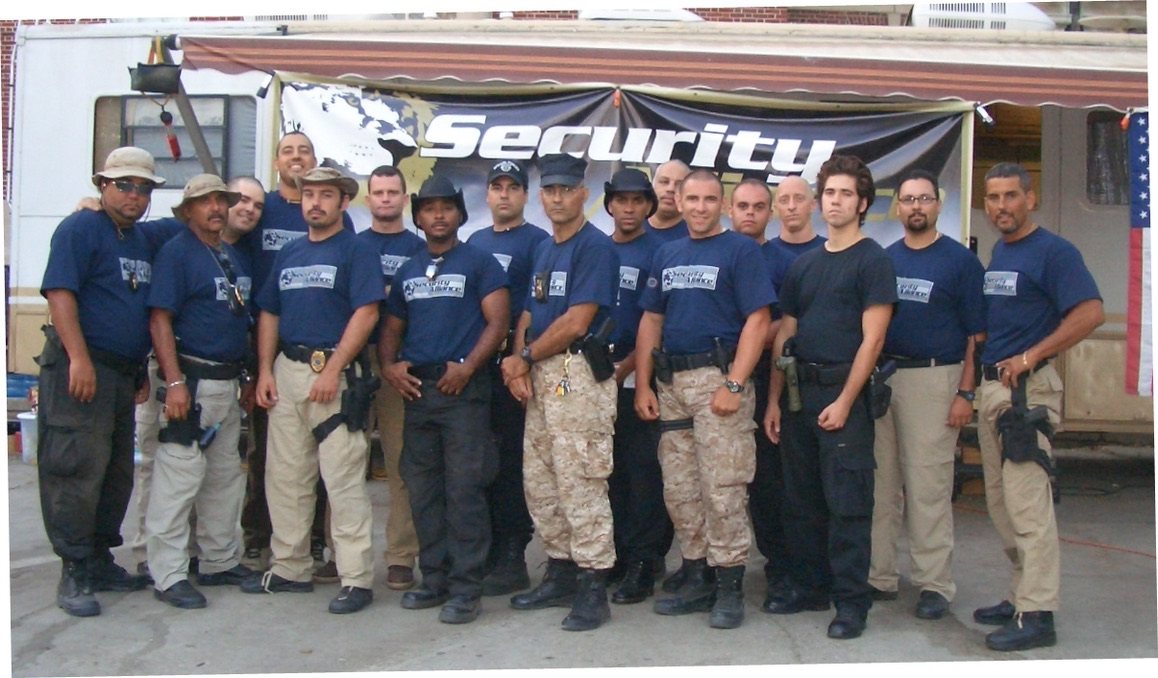
Energy, mining and industrial operations rarely sit somewhere convenient. Security Alliance runs permanent operations in the United States, Belize, Ecuador and Suriname - staffed and managed by us, not subcontracted - so remote sites get the same standard as the head office.
Remote-site security is a logistics problem first.
The security plan is the easy part. Rotations, transport, local licensing, national hiring, supervision at distance and a communications path that works at 2am are what actually determine whether the plan survives contact with the site.
In-country operations, not coordination
Offices and staff in Belmopan, Quito and Paramaribo, alongside Miami and five other U.S. locations. Named country managers, on the ground, inside our own management line.
Gate, perimeter and access control
Entry control points, vehicle and materials inspection, contractor and visitor processing, and roving patrol - documented through GPS-verified tours and incident reports filed from the post.
Country risk, scored daily
All 195 countries scored every morning at 05:00 EST and published openly by AtlasRisks, the geopolitical risk platform Security Alliance uses for country risk scoring, so a deteriorating situation is visible rather than a surprise.
Movement and travel support
Protective detail planning, secure transportation and travel risk briefings for expatriate staff, visiting leadership and technical teams moving between sites.
Nine offices. Four countries. One standard.
The combination that matters for this sector is a United States corporate relationship with operations that continue past the border - the same vetting, the same post orders and the same reporting on both sides.
- Newmont, Suriname - guard services at gold mining operations, covering access control, asset protection and perimeter integrity, in the same country where Security Alliance holds the U.S. embassy local guard force.
- United States - Miami, Florida (headquarters); Amarillo, Texas; Slidell, Louisiana; Williamsport, Pennsylvania; Piney Flats, Tennessee; Wichita, Kansas.
- Belize - Belmopan.
- Ecuador - Quito.
- Suriname - Paramaribo.
Questions buyers ask us.
Which countries can you actually operate in?
Security Alliance holds permanent operations in the United States, Belize, Ecuador and Suriname, with offices in Miami, Amarillo, Slidell, Williamsport, Piney Flats, Wichita, Belmopan, Quito and Paramaribo. We staff and manage these directly rather than subcontracting to a local vendor and relaying instructions.
Why does in-country presence matter for a remote site?
Because remote-site security is a labor and logistics problem before it is a security problem. Rotations, transport, licensing, local hiring and supervision all happen on the ground. A provider without a registered local operation is coordinating by email across a time zone when a gate incident happens at 2am.
How do you brief teams on country risk?
Country risk scoring comes from AtlasRisks, the geopolitical risk platform Security Alliance uses for country risk scoring. It scores all 195 countries every morning at 05:00 EST from 91 vetted sources across four tiers and nine weighted components, and publishes the index and its methodology openly at atlasrisks.com. Anyone on your team can read it directly. What we add on top of it is site-level reporting from our own supervisors, through the incident and shift reporting written into your program.
Can you support travel and journey movements?
Yes, through our executive protection and secure transportation services: protective detail planning, transport coordination and, where available, armored vehicles. Programs are built around the specific route and principal rather than a standard package.
What about the U.S. side of the operation?
Our Amarillo, Texas office supports Panhandle operations under Texas licenses B07284601 and F07300001, alongside offices in Louisiana, Pennsylvania, Tennessee and Kansas covering industrial and energy-adjacent sites.
Tell us where the sites are.
We will tell you what we can staff directly, what would need a partner, and what the licensing position is in each country - before you go to tender.