Someone has to be in command.
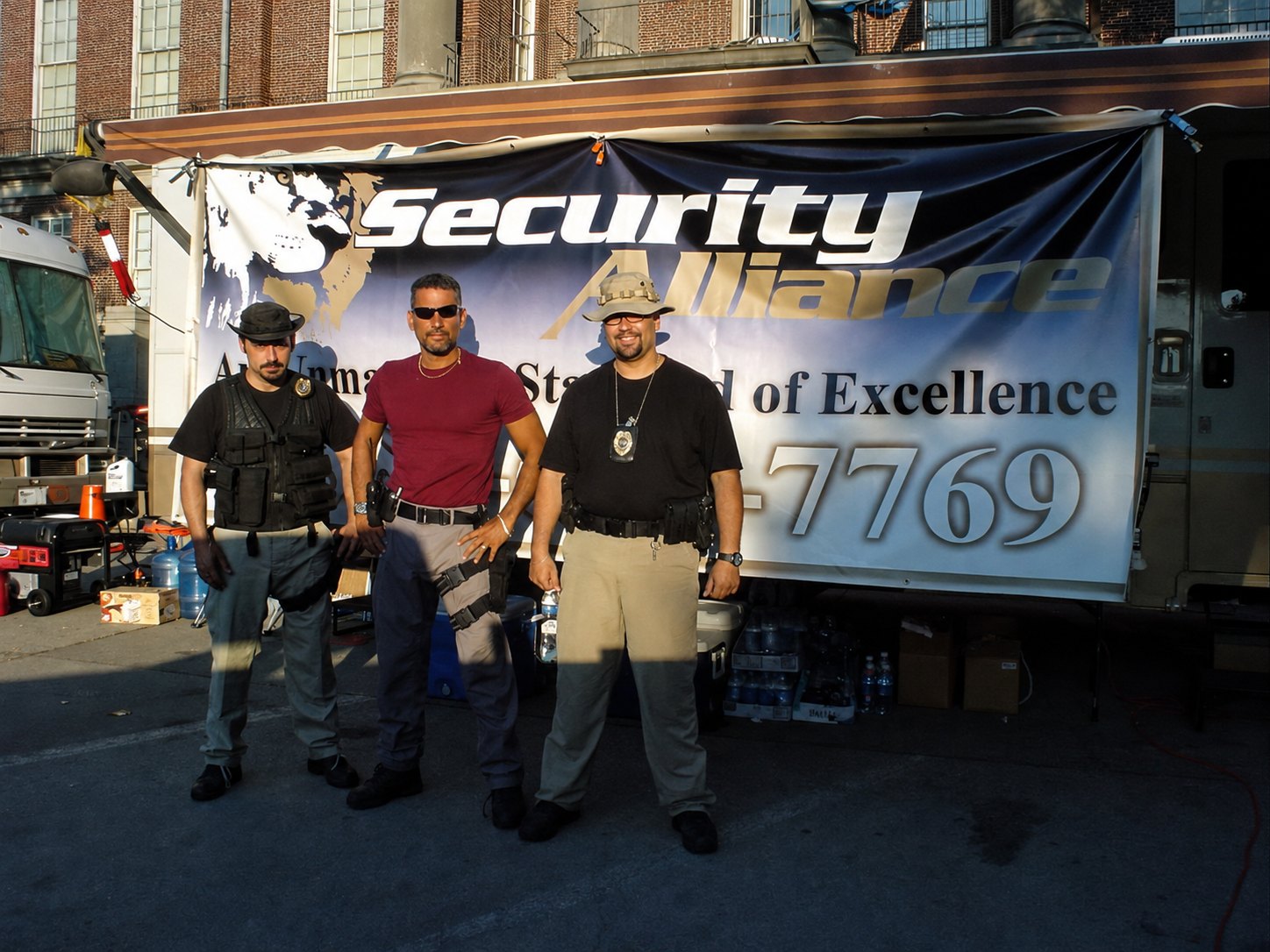
A self-sustaining emergency deployment led by an on-site Incident Commander: a licensed security element, a mobile command unit, and its own power, water and communications. Seventy-two hours without drawing on anything of yours. Florida Security Agency License B 2100072.
Seventy-two hours, taking nothing from you.
In the days after a catastrophic event the scarce things are not guards. They are power, water, a working communications path and somebody empowered to decide. A response that arrives needing all four from the client is not a response, it is another problem on the site. This one arrives with them.
One person in command
An Incident Commander on site, named before deployment, to whom every element reports. Decisions get made where the situation is, not on a call that has to be scheduled. This is our title for the role and a description of how we structure a response, not a claim to a certification.
A licensed security element
Screened, licensed officers, armed or unarmed as the situation and the jurisdiction require. Drawn from more than a thousand security professionals across nine offices, so a surge in one region is not staffed by stripping another site bare.
Power, fuel and water
Generation and fuel for the team's own operation, and potable water for the people on it. The measure of a self-sustaining deployment is simple: for seventy-two hours nobody on it asks you for anything.
Communications that survive the event
A command unit with an operations position and a communications path that does not assume the local network is up. When cell and internet are down, the ability to reach your own site is frequently the thing that has been lost.
We run it, or we work under you.
Which one you want depends on something you already know: whether you have an emergency management function of your own, and whether it is resourced to run a site through the first week.
- As a managed operation - our Incident Commander leads, our elements report to them, and you get a single named point of contact and a written scope rather than a set of vendors to coordinate yourself.
- As a subcontractor to your team - we deploy our people, equipment and logistics into your structure and take direction from your lead. Where an internal crisis team already exists this is usually the better arrangement, and it is the more common one.
- Business continuity as the objective - the point of the deployment is that the operation comes back, not that the site is guarded while it stays shut. What that means in practice differs by site and gets written down before anything is signed.
- Scoped against the site, not a brochure - a refinery, a hospital campus, a port facility and a residential tower need different things. What deploys beyond the command unit, the security element, power, water and communications is decided against the site and written into the plan.
- Federal and state work - active SAM.gov registration for all awards, listed on the disaster response registry, UEI VBZBJQQNKT96, CAGE 3SBX5. See federal contracting.
Four things to settle while nothing is happening.
None of these can be decided during an event, and all four are cheap to decide now. Ask them of us as readily as of anyone else you are considering.
What triggers mobilization?
A named condition and a named person who declares it. Not a judgment call made at 3am.
Who is in command, and under whom?
Ours leading, or ours reporting to yours. Decide it before, not on arrival.
What does the team need from us?
For the first seventy-two hours the answer should be nothing. Get that in writing.
What does "back to normal" mean here?
Define the end state now. A response without one runs until somebody runs out of patience.
Questions buyers ask us.
What does self-sustaining actually mean?
That a deployed team does not draw on your resources to function. It arrives with its own power and fuel, its own potable water, and communications that do not depend on local networks, and it can operate that way for seventy-two hours. Seventy-two hours is the planning horizon most continuity plans are written against, and it is the window in which local infrastructure is least likely to be back. Beyond that the deployment is resupplied on a schedule agreed in the plan.
Is your Incident Commander the same as an ICS Incident Commander?
No, and it is worth being clear about it. Incident Commander is our title for the person who owns the response: one named individual, on site, to whom every element reports and who has the authority to make decisions without waiting for a call to be returned. We are not claiming a qualification under the Incident Command System, and if your continuity plan requires a credentialed ICS Incident Commander you should ask us directly rather than assume. What we are describing is a command structure, not a certificate.
What if we already have a crisis team?
Then we work under it. A great many clients have an emergency management function and do not want a second one turning up with its own ideas. In that arrangement we deploy as a subcontractor: our people, our equipment and our logistics, reporting into your structure and taking direction from your lead. It is the more common engagement, and it is usually the better one where an internal team already exists.
When should this be arranged?
Before the season, not during it. A plan written while a storm is forming is a plan written badly, and by then everyone capable is committed elsewhere. The useful work is a walk of the sites, an agreed trigger for mobilization, a written scope, and named people on both sides who have each other's numbers. That costs very little and it is the entire difference between a response and an improvisation.
What does the command unit bring to a site?
It is the piece that makes the rest possible: a working operations position when the building is unusable, power that does not depend on the grid, and communications that do not depend on the local network being up. Everything else on a deployment is scoped against the specific site and written into the plan rather than promised in advance, because a refinery, a hospital campus and a residential tower need different things.
Do you work federal and state emergency contracts?
Security Alliance holds an active SAM.gov registration for all awards and is listed on the federal disaster response registry, under UEI VBZBJQQNKT96 and CAGE 3SBX5. Full identifiers, NAICS codes and license numbers are published on our federal contracting page for anyone building a bid package or running vendor onboarding.
Plan it before you need it.
Tell us the sites and what has to keep running. We will walk them, agree the trigger, and put the scope in writing - including where you need less than you think.